Restaurant Chart of Accounts: A Template and How to Use It
A restaurant chart of accounts is the numbered list of accounts your books use, grouped by type: assets in the 1000s, liabilities in the 2000s, equity in the 3000s, income in the 4000s, cost of goods sold in the 5000s and expenses in the 6000s. The restaurant-specific part is splitting food, beverage and bar, so you can see each one's margin.
A good chart is short enough that every account gets read and detailed enough to answer the questions you actually ask: what is my food cost, my bar cost, my labour cost, and where did the cash go. Below is the template CashSheet uses for restaurants, account by account.
Assets (1000s)
| Code | Account | What goes in it |
|---|---|---|
| 1010 | Cash and Bank | Bank accounts and cash on hand. |
| 1020 | Money in Transit | Card sales and deposits that have left the register but not reached the bank. |
| 1100 | Accounts Receivable | Catering and house accounts invoiced but not yet paid. |
| 1200 | Food & Beverage Inventory | Food and non-alcoholic beverage stock on hand. |
| 1210 | Bar & Liquor Inventory | Beer, wine and spirits on hand, kept apart from food. |
| 1300 | Prepaid Expenses | Insurance, rent or subscriptions paid in advance. |
| 1500 | Kitchen Equipment | Ovens, refrigeration, POS hardware and other equipment. |
| 1510 | Less: Accumulated Depreciation | Depreciation built up against that equipment. |
| 1600 | Other Short-Term Assets | Deposits and anything else short-term. |
Liabilities (2000s)
| Code | Account | What goes in it |
|---|---|---|
| 2010 | Accounts Payable | Vendor bills you owe. |
| 2020 | Credit Card | Balances on the business's credit cards. |
| 2030 | Loan and Line of Credit | Equipment loans, SBA loans, lines of credit. |
| 2040 | Sales Taxes Payable | Sales tax collected and owed to the state. |
| 2050 | Due for Payroll | Wages earned but not yet paid. |
| 2060 | Due to Owners | Money the business owes its owners. |
| 2070 | Customer Prepayments | Catering deposits and other money taken before the food is served. |
| 2080 | Other Short-Term Liabilities | Anything else owed within the year. |
Equity (3000s)
3010 Owner Contribution and Drawing records money owners put in and take out. 3900 Retained Earnings holds past years' profit.
Income (4000s)
| Code | Account |
|---|---|
| 4010 | Food Sales |
| 4020 | Beverage Sales |
| 4030 | Catering Income |
| 4040 | Other Income |
| 4050 | Uncategorized Income |
Food and beverage are separate because their margins are different and you'll want to price them separately. Catering gets its own line because it behaves like a different business: deposits, invoices and larger orders.
Cost of goods sold (5000s)
5010 Food & Beverage COGS and 5020 Bar & Liquor COGS mirror the two inventory accounts. Food cost percentage is 5010 divided by food and beverage sales; bar cost is 5020 divided by bar sales. Keeping them apart is the whole point: a blended number hides a bar that is pouring heavy.
Expenses (6000s)
- Payroll, 6200 to 6220: gross pay, employer taxes and benefits. Add these to COGS and you have prime cost, the number most operators watch most closely.
- 6140 Payment Processing Fees: card fees on their own line, so you can see what processing really costs and shop it.
- Occupancy and running costs: 6100 Rent, 6130 Utilities, 6110 Repairs & Maintenance, 6120 Telephone & Internet, 6050 Insurance.
- Restaurant-specific: 6150 Linen & Uniform and 6160 Cleaning & Sanitation.
- Everything else: advertising (6010), bank charges (6020), depreciation (6030), dues and subscriptions (6040), interest (6060), meals and entertainment (6070), office supplies (6080), professional fees (6090), and 6500 Uncategorized Expense as a holding pen to clear each month.
Accounts worth adding
The template is a starting point. Two common additions: a Discounts account (contra revenue) if you want discounts visible instead of simply reducing sales, and a separate income line for a cash discount or dual pricing adjustment if you run one, so you can see what it brings in. Add accounts when you will read them, not because a list somewhere has them; every extra account is one more place for a transaction to land wrong.
If you run several locations, use the same numbers at every site so the reports line up.
How the daily postings use it
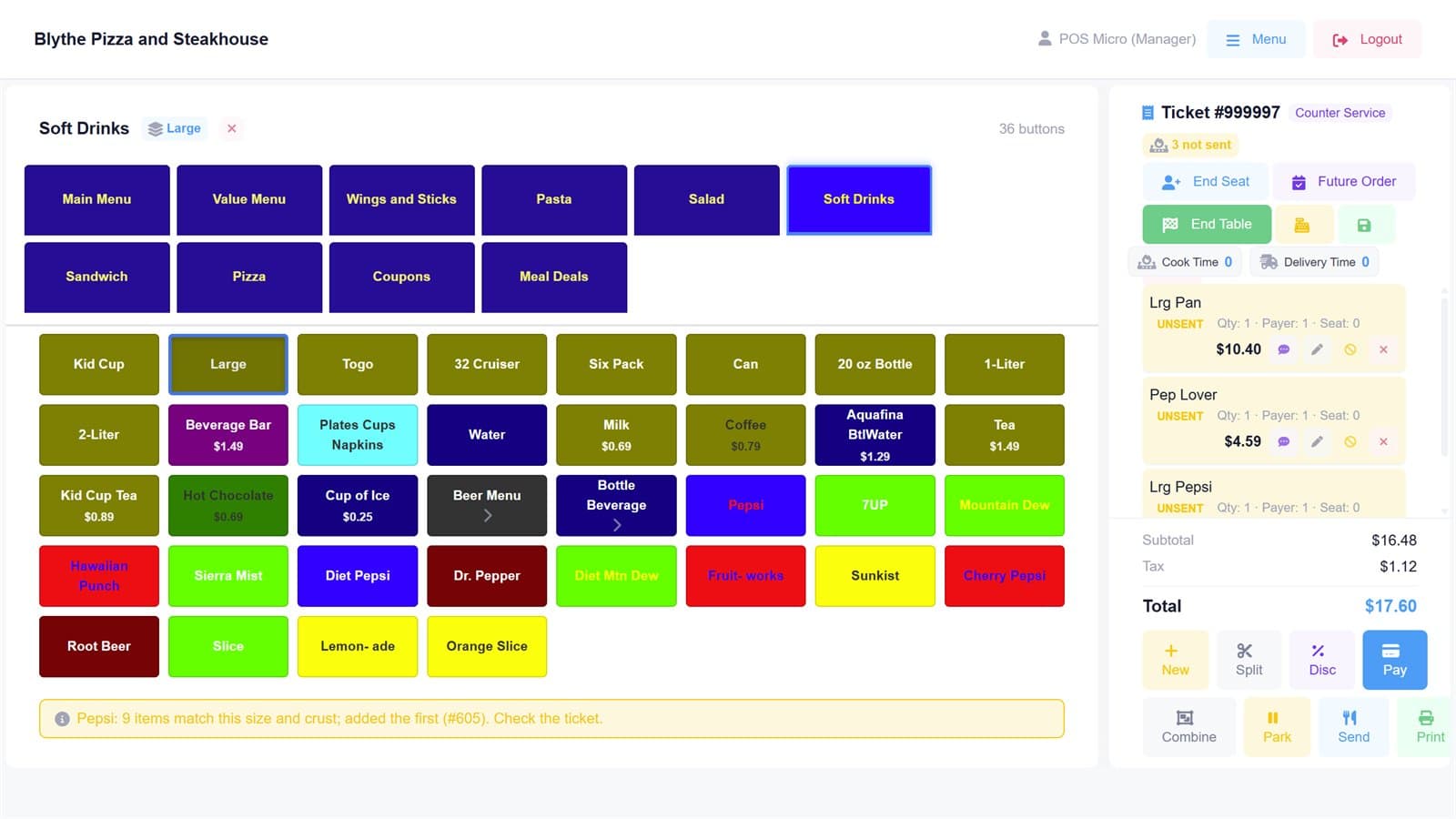
A chart of accounts earns its keep when your sales, labour and inventory post to it without retyping. In CashSheet accounting, new restaurant workspaces start from this template. Each night the previous day's sales post as one balanced entry: cash, discounts, sales, sales tax payable and any dual-pricing adjustment, to the accounts you choose. The day's wage cost accrues to Due for Payroll until your payroll run clears it, and each week inventory purchases, cost of goods sold and variance post to the inventory and COGS accounts.
New to debits and credits? Start with double-entry accounting, explained.