Dual pricing that the till does for you.
Run a cash discount, dual pricing or a card surcharge on CashSheet POS. Set it once per store, and every till quotes it at the tender, prints it on the receipt and keeps it out of your sales figures.
How CashSheet runs a pricing programme.
Three programmes, one switch
Choose cash discount, dual pricing or surcharge for each store in the Back Office. Every till at that store picks it up on its next sync.
Quoted at the tender
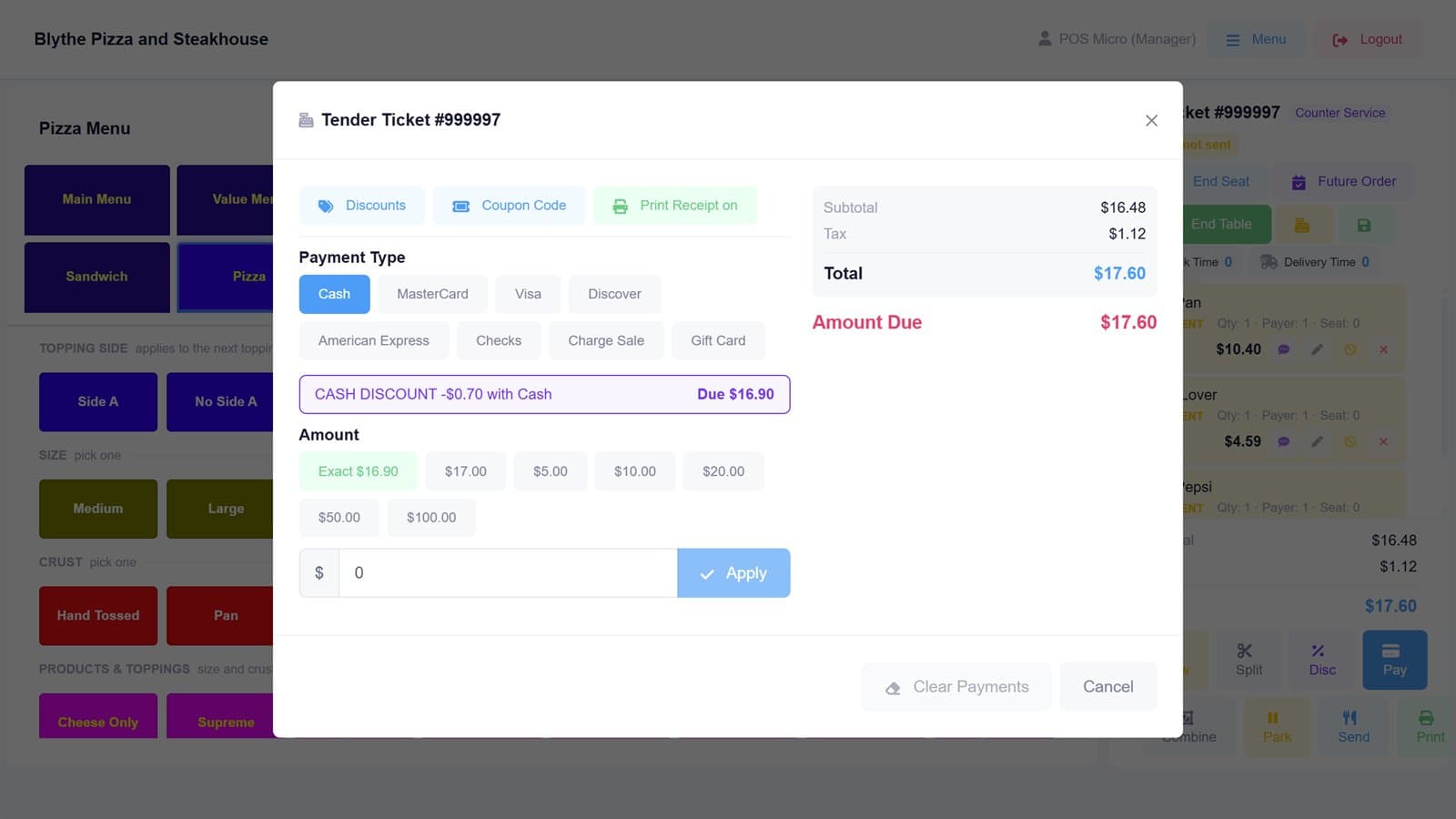
The till works out the cash and card amounts when the guest pays, so the cashier never does the arithmetic and a split tender adjusts only the card part.
A percentage, a flat amount, or both
Set a rate such as 3.5%, a fixed amount per payment, or the two together. A credit surcharge is refused above the card brands' cap.
Itemised on the receipt
The adjustment prints on its own line with the label you choose, so the guest sees exactly what the card price added or the cash price saved.
Kept apart from sales
The adjustment never inflates item sales. It has its own line on the cash sheet and posts to its own account, so you can see what the programme brings in.
Not tied to our processing
CashSheet doesn't sell card processing. The programme runs in the till, whether cards go through your own Stripe account or another processor's terminal.
The posted price decides the programme.
Cash discount, dual pricing and surcharge can produce the same totals. What separates them is which price you post on the menu and the door, and that is what card brands and states care about. CashSheet treats the programme as a choice you make per store, not just a rate.
Cash discount
The menu price is the card price.
Guests paying cash get a discount at the tender. The receipt shows the discount line.
Dual pricing
The menu shows both a cash price and a card price.
The till charges whichever matches the tender and prints the difference on its own line.
Surcharge
The menu price is the cash price.
A fee is added when the guest pays by credit card. Card brands cap it, and some states restrict or forbid it.
This page explains how CashSheet runs each programme; it isn't legal advice. Card brand rules and state laws decide what you may post and charge, so check them, and ask your processor, before you switch a programme on.
The cashier presses Cash or Card. The till does the rest.
The tender screen shows what the guest owes for the way they are paying. Split a check between cash and card and only the card part is adjusted. The receipt itemises the adjustment under your label, and the drawer still balances at the end of the night because the cash sheet carries the adjustment on its own row.
The same setting reaches every register at the store, Windows till or Android, so two cashiers can never quote two different card prices. See the rest of the POS.
Dual pricing questions
What is the difference between dual pricing and a cash discount?
With a cash discount the posted price is the card price and cash payers get money off. With dual pricing the menu shows both prices and the guest pays the one that matches how they pay. The arithmetic can be identical; what changes is which price you post and how you describe it.
Is a surcharge the same as dual pricing?
No. A surcharge adds a fee to the cash price when a guest pays by credit card. Card brands cap surcharges and require notice, and some states restrict them, so check your state's rules and your processor's requirements before turning a surcharge on.
Do I need a special processor to run dual pricing on CashSheet?
No. CashSheet does not sell card processing, and the programme runs in the POS itself. Integrated card payments go through your own Stripe account; with another processor, its terminal works alongside the till and the card payment is recorded on the ticket.
Can different stores run different programmes?
Yes. The setting is per store, so a group can run a surcharge in one state, dual pricing in another, and nothing at a third site.
Where does the money from the programme show up in my books?
On its own line. The till keeps the adjustment apart from item sales, the cash sheet can give it its own row, and the nightly accounting entry posts it separately from food and beverage sales.
Turn on the programme your store has chosen.
Cash discount, dual pricing or surcharge, from software that doesn't sell processing.
Get started free