We Run Our Own Farm on CashSheet: Dorper Sheep at Cosmic Family Farms
The farm behind the software
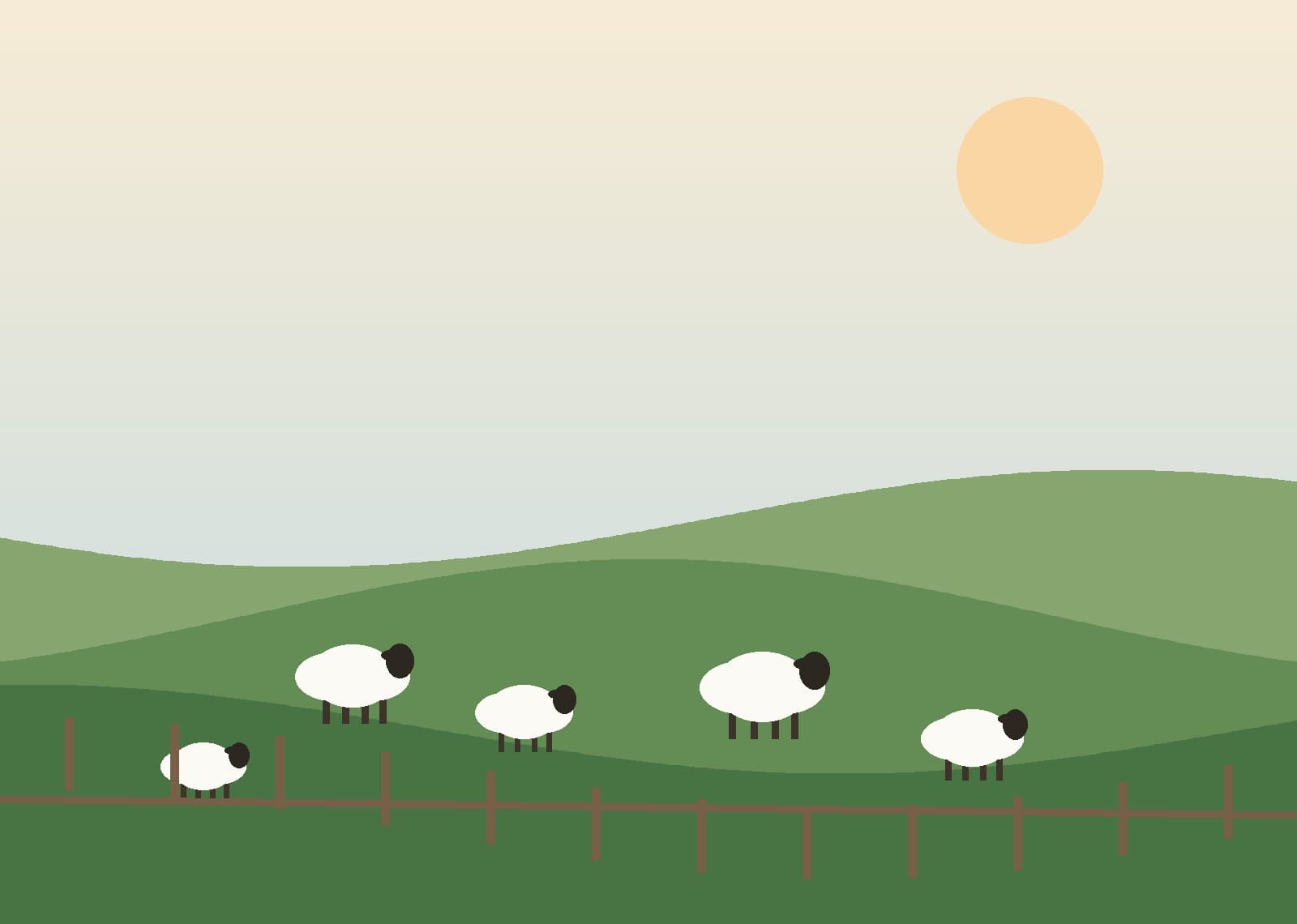
Cosmic Family Farms is a family-owned operation raising Dorper sheep — and it happens to belong to CashSheet's founder. That makes it something better than a reference customer: it's the place where our own software has to survive contact with real animals, real customers, and real month-ends. When something about the platform is annoying at 6 AM in work boots, it gets fixed.
Most of what we write about on this blog comes from large protein processors — fab floors, carcass yields, LP solves over hundreds of products. A sheep farm is the other end of the scale. It turns out the core problem is exactly the same size.
The small producer's version of the availability problem
A beef plant oversells when the sales desk promises cuts the fab floor can't produce. A sheep farm oversells the same way, just with a smaller vocabulary: a restaurant wants lamb for a date three weeks out, a family wants a freezer order next month, a fellow breeder asks about ewes. Every one of those is an availability question, and the honest answer depends on the same things it depends on in a plant — what you have, what's already promised, and what's coming through the pipeline (in our case, what's on pasture and when it finishes).
The traditional answer for a farm this size is memory and a notebook. Memory works until it doesn't — usually the week two buyers want the same lambs. Saying yes to both is how small farms lose the customers that matter most, because the second promise is the one that breaks.
What the farm actually runs
Availability through CutSheet. The flock's sellable supply lives in the same Available-to-Promise system the processors' edition runs. Before the farm commits to an order, the commitment is checked against what's genuinely uncommitted — so a yes is a yes, and a "not until May" is said up front, when it's a scheduling conversation instead of an apology.
Books on CashSheet. Every sale posts into double-entry books on a dedicated CashSheet silo — the same accounting engine, the same isolation, that every silo gets. Feed invoices, processing costs, customer payments: the farm's financial picture is current, not reconstructed at tax time from a shoebox.
Nothing about this setup was special-cased for the farm. That's the point. The platform's smallest tenant and its largest run the same software.
Why Dorper, incidentally
If you're not from the sheep world: the Dorper is a South African breed developed for hardiness and meat quality. It's a hair sheep — no shearing — with mild, tender lamb that wins over people who swear they don't like lamb. For a family-scale operation, it's a breed you can run well without a crew. You can read more on the farm's website.
What dogfooding teaches a software company
Running our own operation on the platform keeps us honest in three specific ways:
- Onboarding has to be survivable by a farmer. If setting up products, customers, and a chart of accounts requires a consultant, it's too complicated. The farm is our permanent usability test.
- The availability promise has to hold at any scale. The LP doesn't care whether it's allocating ribeyes across a fab shift or lambs across a season — but the trust model is identical: never let the system say yes when the answer is no.
- Month-end is real. When the books close on a real business every month — even a small one — accounting bugs are not theoretical.
The takeaway for producers of any size
If a family sheep farm gets value from promise-what-you-can-deliver availability and clean double-entry books, the case only gets stronger as the operation grows. The tools that keep a flock honest are the same tools that keep a plant honest. We know, because we use both.
Curious what this looks like for your operation? Talk to us — or go see the farm at cosmicfamilyfarmsllc.com.